
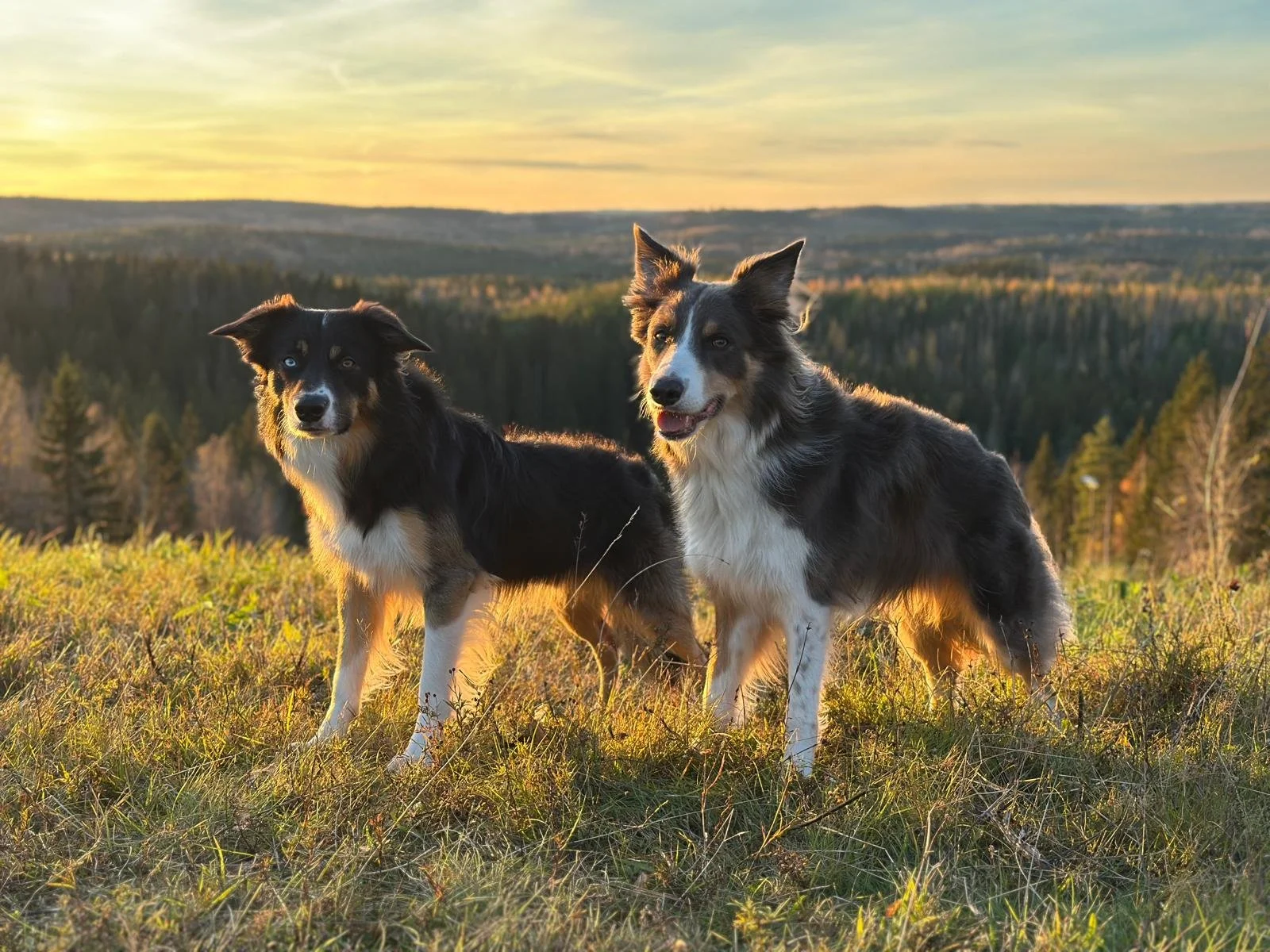
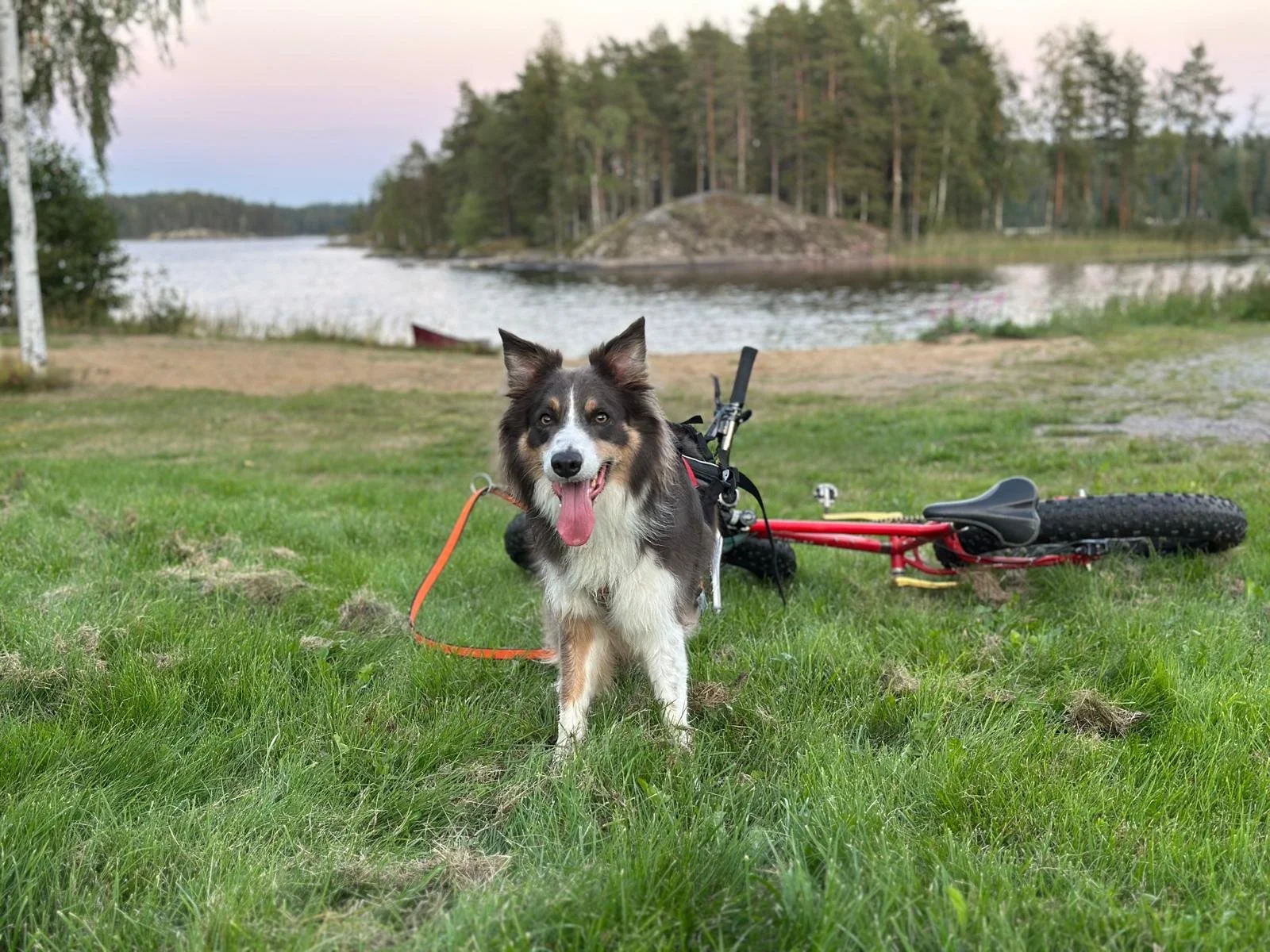
A year and a half ago my bordercollie, Koodi, injured one of his toes while playing with my bordercollie puppy Filmi. We were faced with 6 months of recovery and no guarantees that it would heal well enough to do agility. While the toe was healing, I had a lot of time to think about options. What if we couldn’t do one of our favourite sports when he is still in his prime years? That is when I thought we might try hoopers. It had only become an official competitive sport in Finland after my dog’s injury and momentum was building. The marketing was that with no jumps, contacts, weaves or generally very tight turns the sport is easier on a dog’s physique.
What is hoopers?
So what did I know about hoopers? I knew some of my friends had been training it for a while already. I had also been to a small intro with my senior dog a few years ago. So I knew some basics. Once the toe was healthy enough for training, we started in a weekly group. For an experienced multi-sport dog, the beginning was very smooth for Koodi - he already knew how to run around me in a large circle and learned to aim for the hoops and chutes in pretty much one session. Running around barrels was also easy. With the basics down a bit too fast, it was time to think about verbal cues - what kind of handling did I want to aim for? We had only just started and felt I would have to decide how far we would like to go with the sport. Hoopers was somehow different to other sports and the reason is likely the distance handling, which in the higher classes has to work far away from the handler with obstacles in between the handler and dog and additionally the speed at which the cues have to be given is very fast. So while the beginning was surprisingly easy, the sport was actually very tricky.
Hooper is fast!
Hoopers obstacles and courses
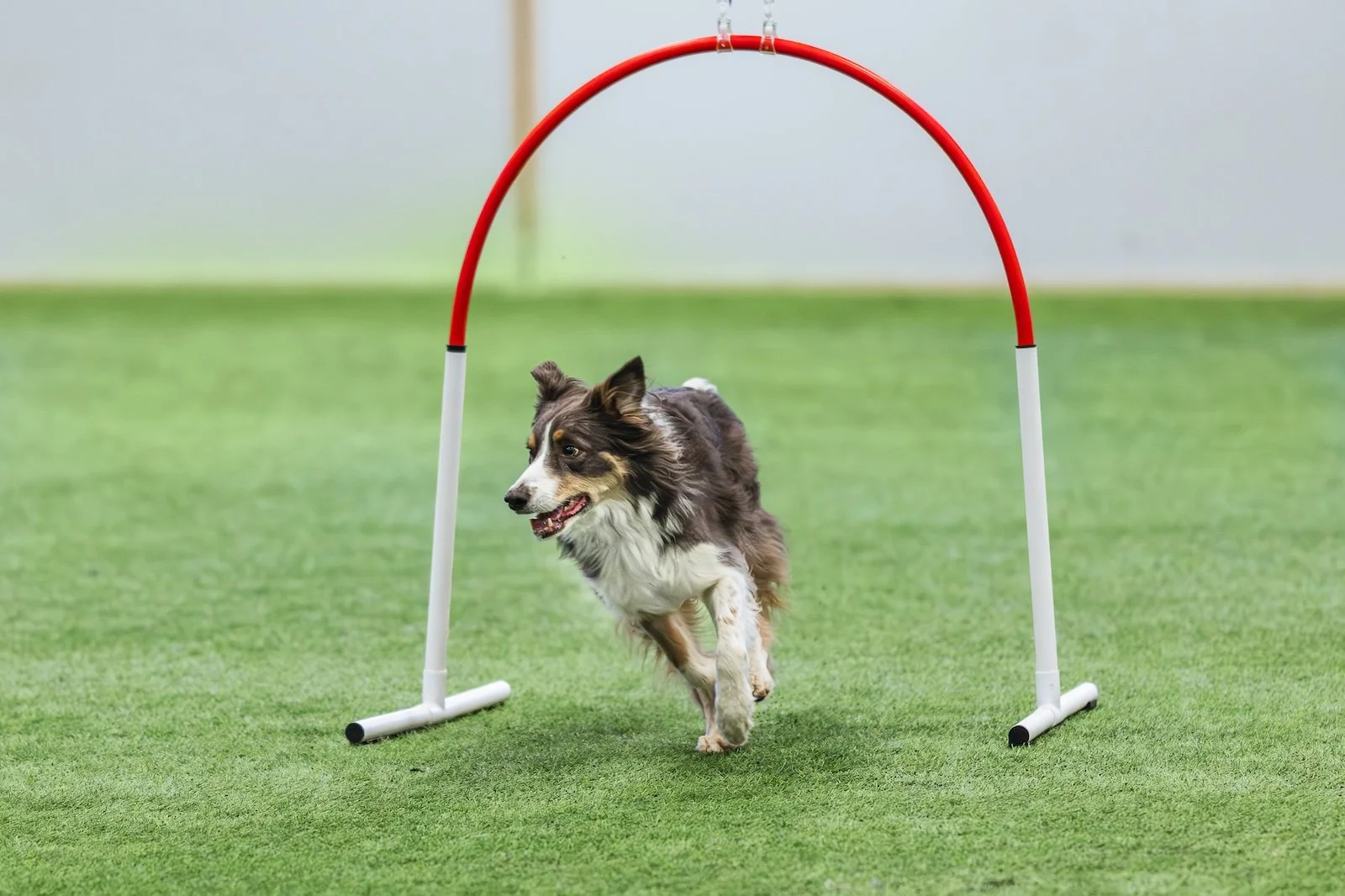
So, let’s go back to the beginning. A hoopers course generally consists of four types of obstacles: hoops, chutes (tunnels), barrels, and gates. The dog goes through the hoops and chutes as one might expect, but there are generally no tight turns from one hoop/chute to the next. Tighter turns and directional changes are done at barrels and gates, though the dog’s line may also go quite straight in front or at the back of a barrel or gate. In addition to the obstacles, the main differentiating feature, when compared to agility, is the distance handling. The handler has a designated handling area that may be a 2 m * 2 m square or a circle with a 2 m diameter. (These according to the new rules from the FCI. )
There are only two size classes (under and over 40 cm), but 3 competition levels like agility. In the first class (H1) the course has 12-18 obstacles, a maximum of 15 m from the handling area and during the course the natural handling side has to change at least once. So a course can’t just be going around in a circle even in the first class. In subsequent classes H2 and H3 the handling side has to change at least two times and the distances between obstacles in H3 get up to 12 m and between the obstacles and handling area up to 30 m. The distances are slightly smaller for smaller dogs. Also in H3 the amount of obstacles can go up to 26.
Through the hoops!
About cues and timing
While in agility there may not be a huge need to teach different cues for tight and less tight turns on jumps, as the handler is generally able to physically signal the tightness of the turn, in hoopers, because of the distance handling this need becomes apparent. When the dog is running toward a barrel for instance, they need to know which side of the barrel to run on and how tight a turn to make to find the next obstacle. The turn can be anything from a slight curve to over a 180 degrees. One might need three to four cues for the tightness of a turn and these may need to be doubled because of the handling side or left versus right. That amounts to a lot of training and it is sometimes difficult to know how tight a turn really is because it depends on the line the dog has taken from the previous obstacle.
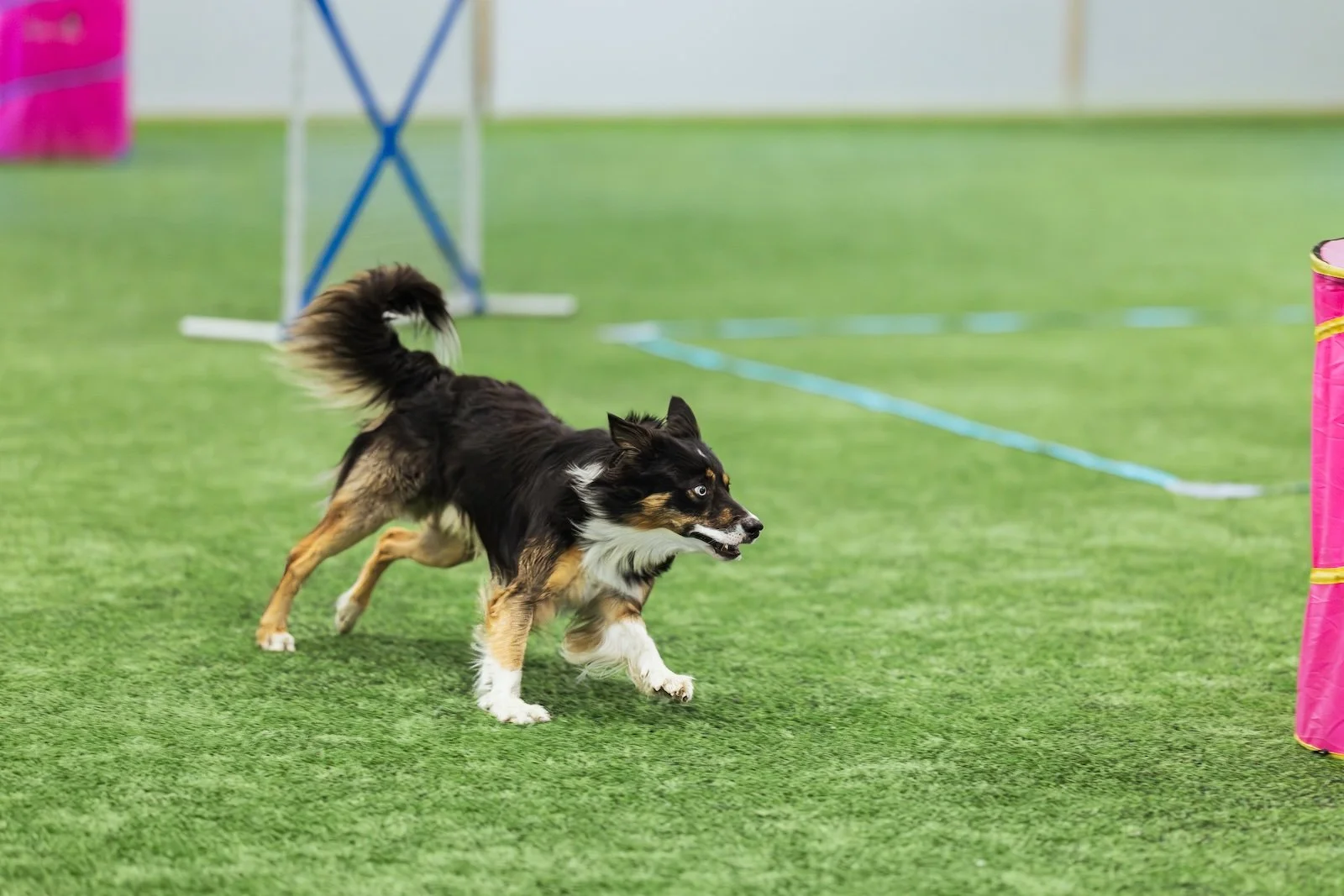
Then there is the timing problem. Hoopers courses should be designed to be easy and smooth for the dog to run, but this means the dog can run at full gallop and that is very fast, if one needs to give one cue per obstacle. Of course the cues also have to be on time just like agility so the dog knows the next obstacle’s instructions ahead of time. This timing aspect at least for me is very difficult, especially, as I don’t think I am a very verbally gifted person. Generally, I feel like when I started agility and needed to learn how to move my body, but only now I need to learn how to use my voice. Luckily, as a crazy dog sport person I guess the challenge in learning a new sport is the whole motivation. So we continue to train!
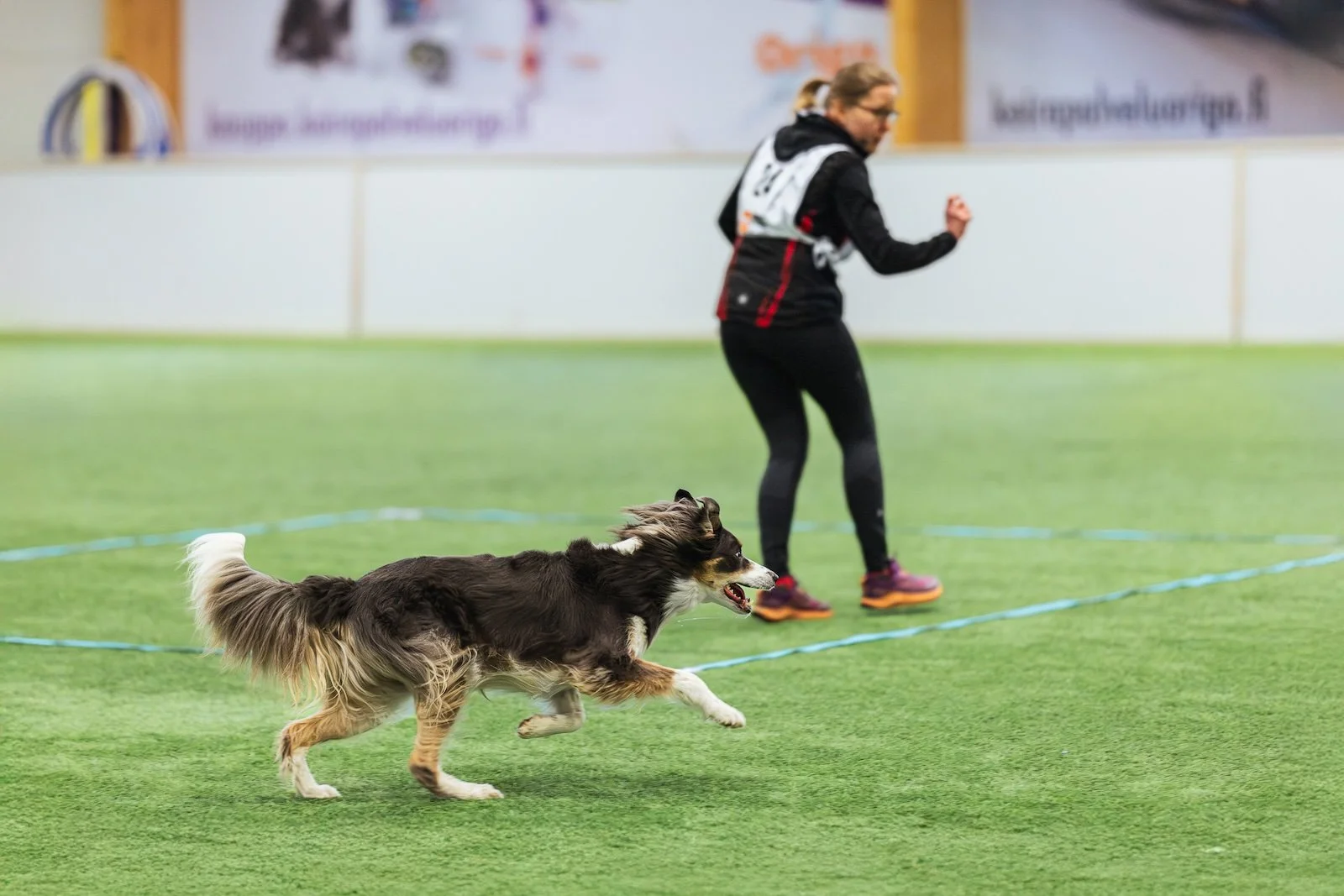
So we continue to train!
What do I like most about hoopers?
I have now trained hoopers for almost a year, first with Koodi, and then also with my now almost 2 year old “puppy”. Both have done a few courses at competitions, and even with me messing up on the cues, have managed a clean run ratio of 1/3.
The distance work with the dogs running at full speed, but still able to listen.
Start behaviour - when you get disqualified, if the dog does the first hoop before you reach the handling area, you have to teach a good stay and this has also helped in agility.
The challenge! There is always new skills to learn in dog sports and it is very refreshing.
Have you tried hoopers? What do you think?
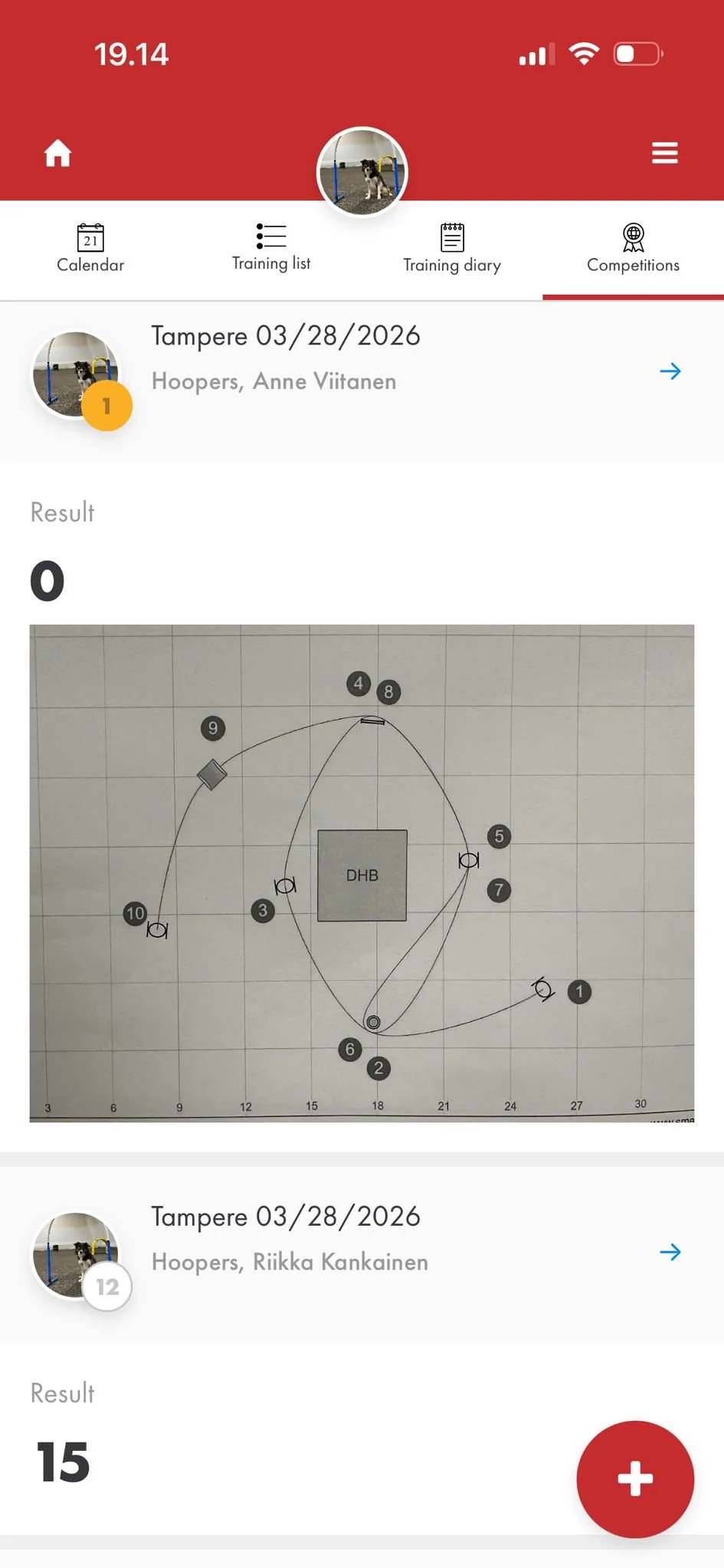
Add Hoopers competitions to AgiNotes
Just like any other agility competition, you can easily add your Hoopers scores to AgiNotes.