
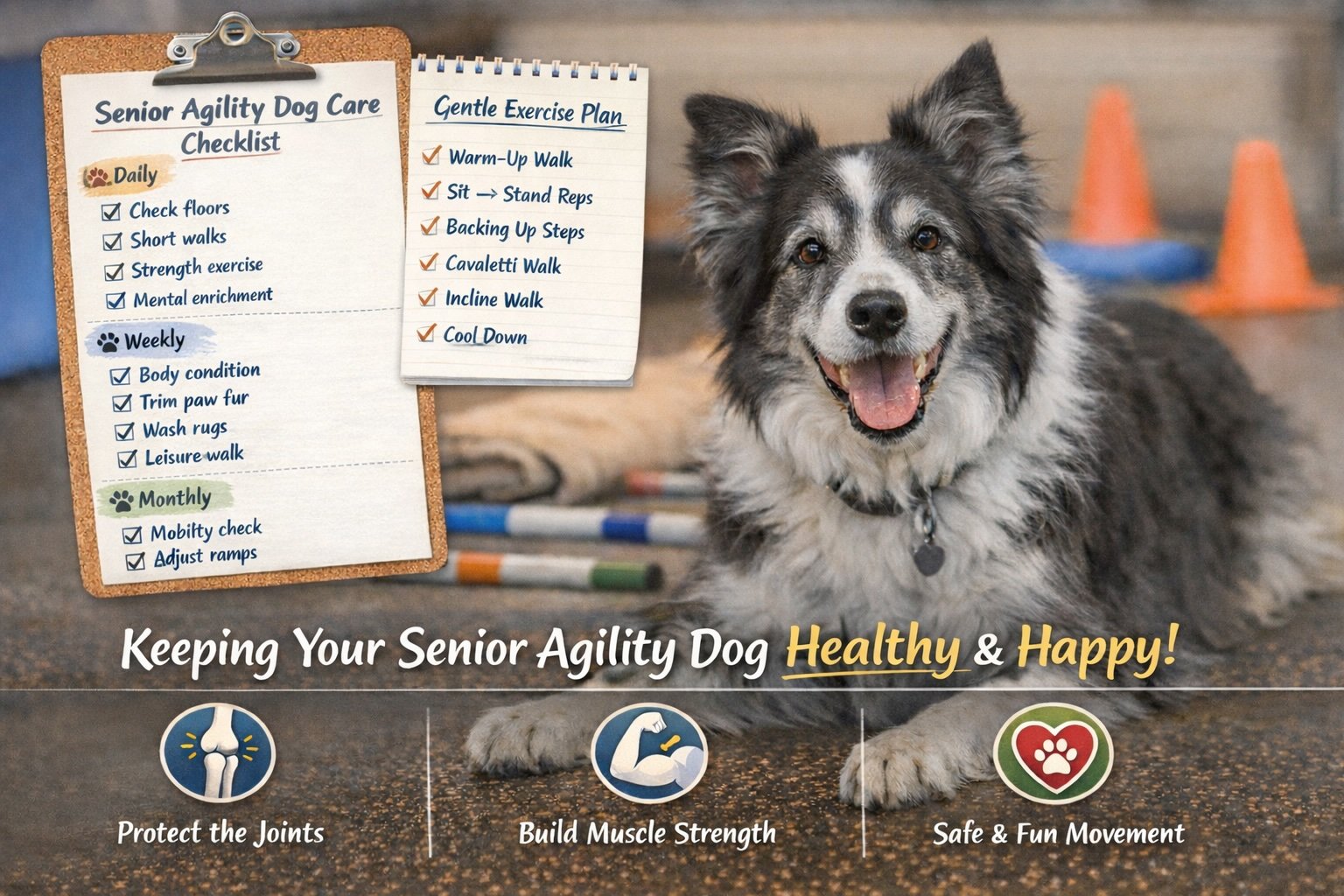
Whether your dog has been an agility athlete for years or simply enjoyed zooming around the backyard or a nearby forest, the transition into a slower rhythm can feel emotional for both dog and handler. For example border collies are wired to move — and when stairs become challenging or slippery floors make the backend slide, it’s easy to feel stuck.
This is what happened to my dear Hyvis not long ago. She was suddenly not climbing few simple steps when visiting my relatives, and was getting slower walking steep slopes upward.
After visiting a vet, I realized she is almost 12, a rather impressive age for a border collie. But not a young pup anymore, or an agility star in her prime.
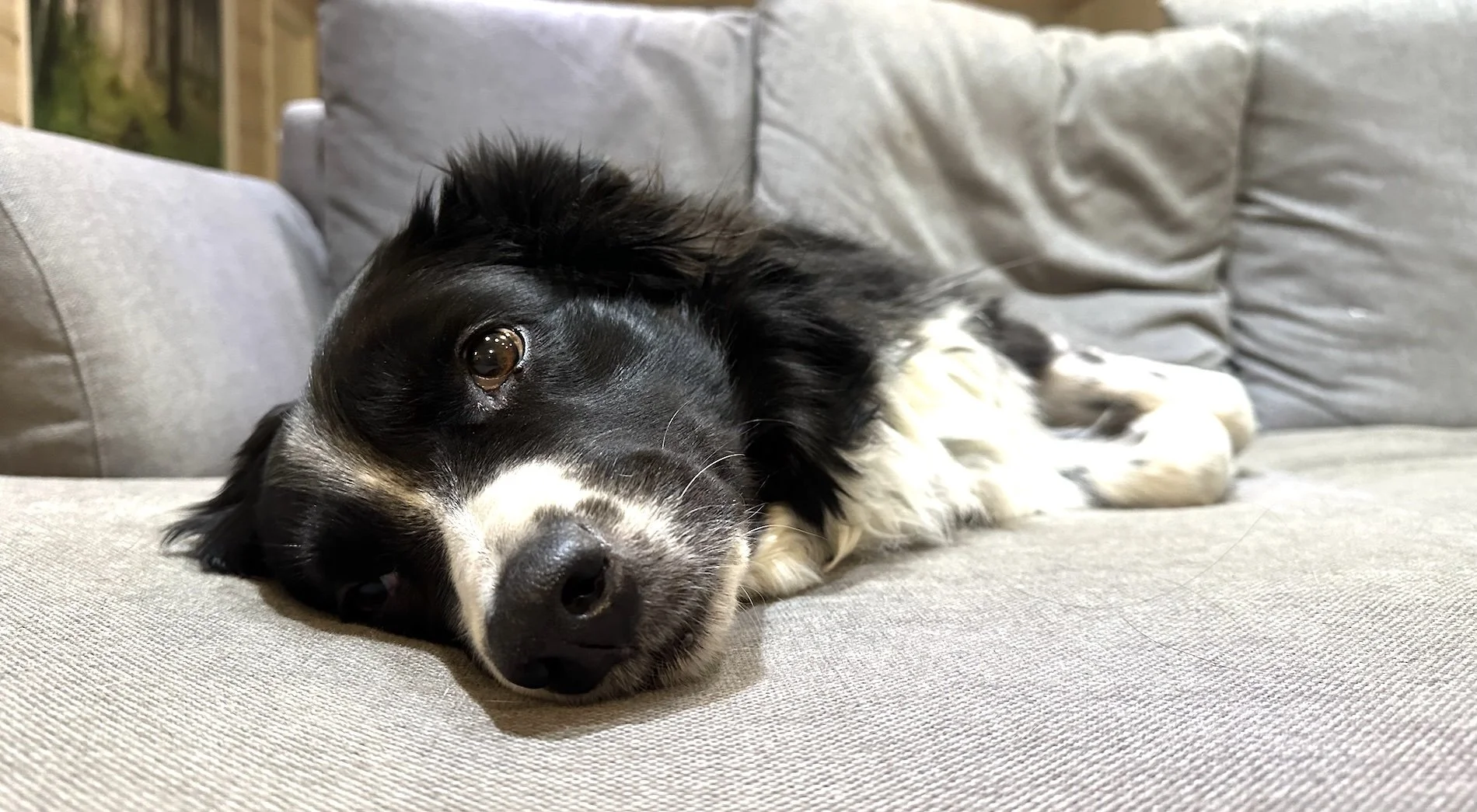
Relaxing on a sofa after a refreshing walk outside.
What we are seeing in older dogs
It’s common that by age 10+
Stairs become harder as muscle strength and joint flexibility change.
Jumping up onto sofas may feel uncomfortable or risky.
Back end slipping happens on smooth floors because hips and balance aren’t what they used to be.
Subtle signs of stiffness, slower starts, or hesitation show up in everyday movement.
These are not failures — they’re signals that your dog’s body is asking for support and adaptation.
But the good news? There’s much you can do to support your dog’s mobility, confidence, and overall quality of life safely, and it is not too hard or expensive.
Best practices for health, safety & comfort
Here’s a set of simple, effective strategies you can implement at home or with your vet/physio support.
Mind you, this is not medical advice, so use and choose what ever you or your vet thinks is best.
1. Protect the joints — reduce strain
Soft landings matter. This is more important for largers dogs.
Add non-slip surfaces — yoga mats, runners, or low-pile carpet — where your dog walks most.
Use rugs on hard floors to improve traction and confidence.
Block access to risky heights (like high sofas) or use dedicated ramps/steps to reduce strain.
Trim paw fur and nails - too much fur or long nails makes paws slippery.
I dug up some old rugs and mats to cover as much floor as possible. It’s not so pretty, but it helps. I also moved a rug beside Hyvis’ favorite sofa so its easier for her to hop on it without slipping.
2. Build & maintain muscle strength
Strong muscles = better support for aging joints.
Try gentle exercises, such as:
Short controlled walks, several times a day instead of one long outing.
Slow inclines on grass or soft ground to encourage rear engagement.
Sit ↔ Stand holds — rewarding every clean repetition.
Physio-like drills (e.g., backing up a few steps, or walking around gentle obstacles).
The goal is consistency, not distance.
At the moment I can’t see any grass, but walking on snow seems pretty good option too. Just need to watch out for icy spots.
3. Keep weight in a healthy range
Extra weight adds stress on joints, especially in senior dogs.
Discuss with your vet about a senior nutrition plan.
Look for diets with balanced protein, omega-3 fatty acids, and joint-friendly nutrients.
Track body condition — you should see a gentle waist from above, and ribs that you can feel with light pressure.
This is something that should be pretty easy to control, if the dog otherwise eats well and has some favorite food.
4. Focus on low-impact movement
Not all exercise needs to be high speed. And at certain age, they probably should not be.
Consider:
Leisurely walks in varied terrain — keeps mind and body engaged.
Short interactive play — gentle tug or scent games.
Swimming or hydrotherapy — great for muscle tone with no load on joints.
We have the opportunity to snuck into nearby forests, so they are great places to do leisure walks.
Hyvis is not a swimmer, she loves to walk on beaches but does not swim.
5. Regular check-ins with professionals
Just like us, older dogs benefit from expert support:
Veterinarian assessments — pain, hips/back health, dental health, and overall wellness.
Physiotherapy or massage — increases range of motion and comfort.
Ask about therapeutic exercises tailored to your dog’s needs.
A good pro will help you spot changes before they become a problem or perhaps help even afterwards.
6. Enrich the environment
Movement isn’t just physical; it’s mental too.
Hide treats at floor level for gentle searching.
Teach new cues that don’t require sprinting — nose touches, paw targeting, etc.
Use puzzle feeders to keep the brain sharp.
These are pretty simple to do. Hyvis likes to look around for hidden food. That can be done outside too.
Final thoughts
Your dear dog may not be climbing A-frames or blasting through weave poles anymore, but with the right practices:
Pain is minimized,
Confidence stays high,
Movement stays safe,
And you can keep your paw pal around longer, enjoying it’s earned retirement
Every small improvement — a better step on the rug, a confident turn on the grass, a relaxed nap afterward — counts.
Happy, safe movement to both of you. 🐶❤️
Checklist and training challenge
Here is a simple checklist for daily, weekly and monthly things to do with your senior dog.
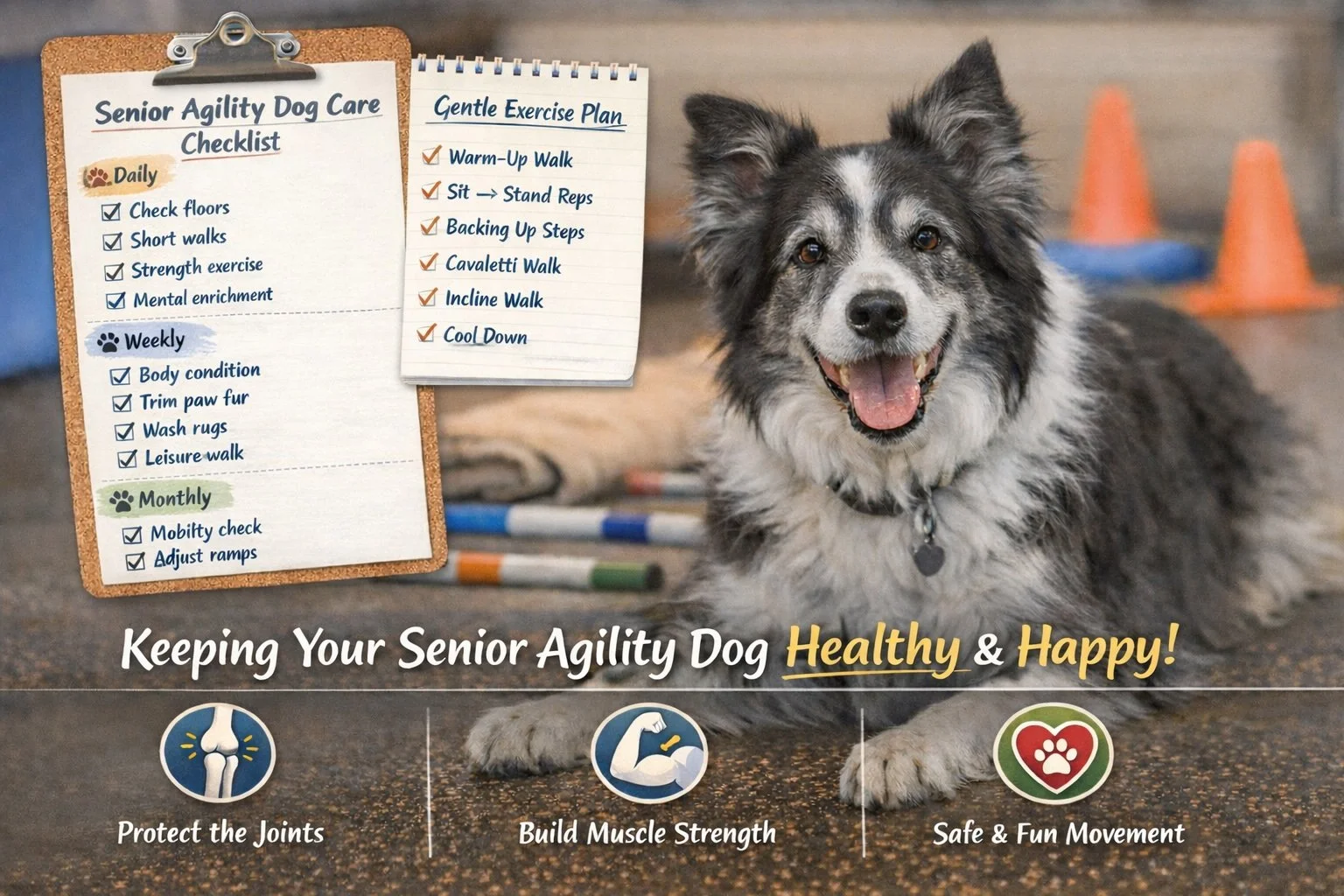
Senior agility dog care checklist
Tip: Changes should be gradual. If something worsens suddenly, pause and consult your vet or physio.
And here you can download a Training challenge - a pre-made checklist of excercises to add directly to your AgiNotes app!